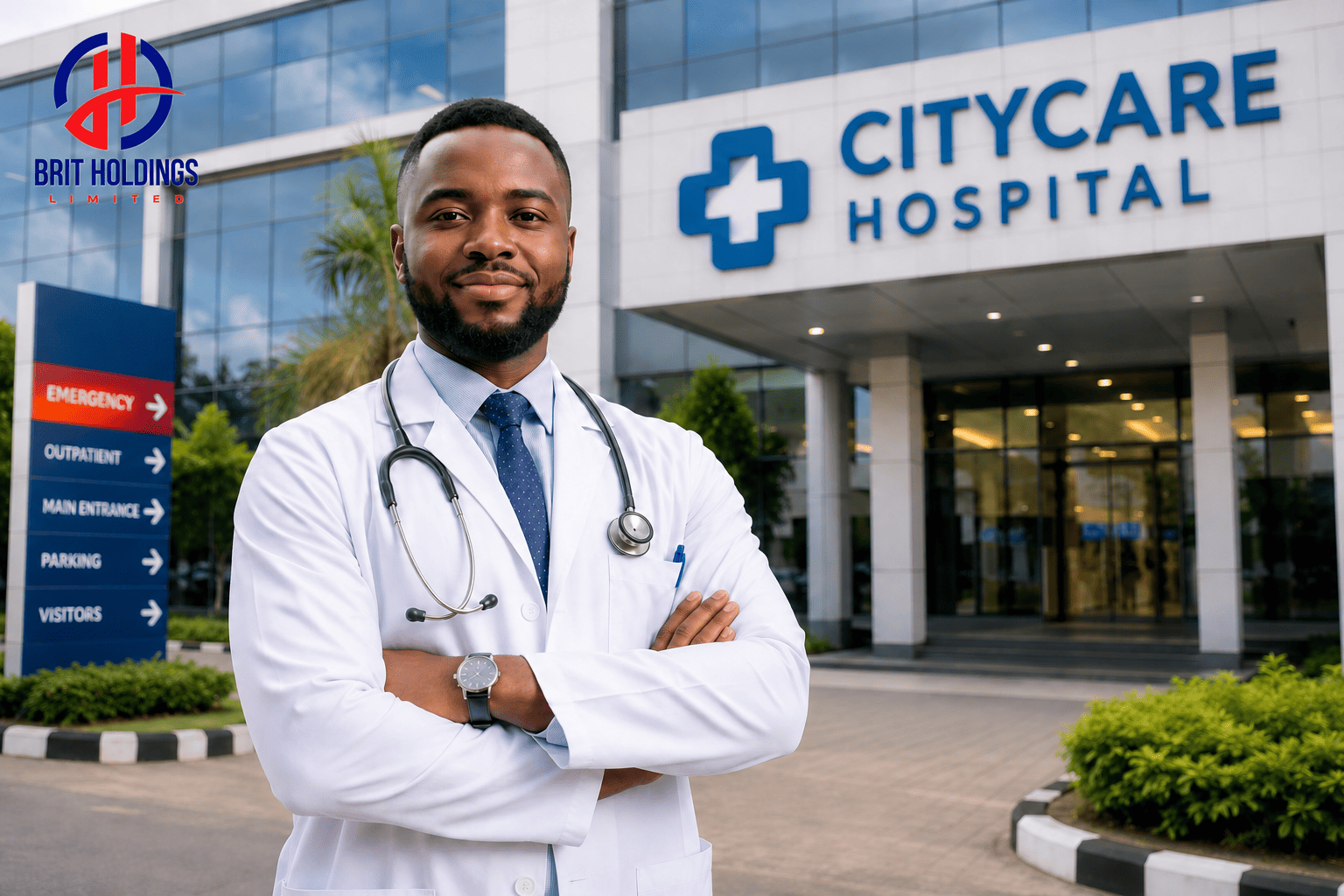
Why Doctors Are Investing in Ibeju-Lekki: The Data-Driven Guide for Medical Professionals
From consulting rooms to boardrooms: how Nigeria's medical community is securing wealth in the nation's fastest-growing corridor
For decades, Nigerian doctors have followed a predictable financial playbook: save diligently, invest in fixed deposits, perhaps buy a home in a quiet neighbourhood. But something fundamental has shifted. Across Lagos and particularly in the sprawling development corridor of Ibeju-Lekki a growing number of medical professionals are becoming serious real estate investors.
This isn't about diversifying income. It's about something more strategic: doctors recognising that the very infrastructure needed to deliver modern healthcare is simultaneously creating extraordinary wealth-building opportunities. When healers become investors, the results can be transformative not just for their portfolios, but for the communities they serve.
Here's the data-driven case for why doctors are quietly accumulating land in Ibeju-Lekki and why you should pay attention.
1. The Lekki-Epe International Airport: A Gateway to Healthcare Growth
The development of the Lekki-Epe International Airport isn't just an aviation project it's fundamentally reshaping what's possible in Ibeju-Lekki. For doctors, the healthcare implications are nothing short of transformative.
What the Data Shows
The Lagos State Government has secured Federal approval to build a new international airport in the Ibeju-Lekki axis as a public-private partnership project. The scale is staggering:
| Metric | Detail |
|---|---|
| Design capacity | Code F-compliant (handles Airbus A380 and other wide-body aircraft) |
| Land area | Approximately 3,500 hectares |
| Initial passenger capacity | 5 million passengers annually |
| Location | Roughly 10km from the Lekki Free Trade Zone |
| Expansion | Modular expansion as demand grows |
Why This Matters for Doctors
Medical Tourism Growth: The airport will make it easier for patients across Lagos and West Africa to access world-class medical care locally, reducing the need to travel abroad. Lekki Airport will make it easier for doctors, surgeons, and medical consultants to travel for international training, medical conferences, and exchange programmes. For doctors, this means more patients, more specialised work, and the opportunity to build practices that serve a regional not just local population.
Emergency Medical Response: With faster air travel and cargo handling, critical supplies such as blood, vaccines, and medical equipment can reach hospitals in record time. This improves outcomes and makes Ibeju-Lekki a more viable location for high-acuity medical facilities.
Attracting Specialised Hospitals: International healthcare brands and specialist hospitals are more likely to set up branches around airport corridors, where expatriates, professionals, and high-net-worth individuals will reside. Doctors who own land or property near the airport stand to benefit enormously as these institutions arrive.
Investment Takeaway: Areas around the airport will attract medical centres, hospitals, and diagnostic hubs making nearby land highly valuable. Early land buyers in strategic estates will profit as global health brands set up offices, training centres, and clinics nearby.
2. Land Appreciation: The Numbers That Demand Attention
Doctors understand the value of evidence. And the evidence on Ibeju-Lekki land appreciation is compelling. Let's look at the data.
Historical Performance (2020–2026)
| Year | Land Price Range (per 500sqm) | Key Developments |
|---|---|---|
| 2020 | ₦5M – ₦15M | Pre-infrastructure phase |
| 2026 | ₦25M – ₦60M | Post-Dangote Refinery, Deep Sea Port |
That represents a conservative 100% – 300% appreciation in 5–6 years, with average annualised growth of 18% – 25%+.
Even More Striking: The 24-Month Window
In Ibeju-Lekki specifically, plots that sold for ₦15 million per plot in 2024 are now commanding ₦25–35 million a 66–133% increase in just 24 months.
The Long-Term Perspective
According to the State of Lagos Housing Market Report, a plot in Ibeju-Lekki that sold for as low as ₦500,000 in 2013 now commands prices between ₦25 million and ₦40 million as of Q1 2025 a potential 40-fold increase.
Comparative Context
| Location | Price per sqm | What ₦100M Buys |
|---|---|---|
| Banana Island | ₦5M – ₦9M | ~15 sqm |
| Lekki Phase 1 | ₦500,000 – ₦1.2M | ~100 sqm |
| Ibeju-Lekki | ₦50,000 – ₦100,000 | 1,000–2,000 sqm |
The Reality: Diaspora investors realise that $100,000 buys a fraction of a flat in Ikoyi, but buys multiple acres of rapidly appreciating land in Ibeju-Lekki.
What's Driving This Growth?
This isn't speculative hype. It's infrastructure-backed growth driven by:
- The commissioning of Dangote Refinery
- Operations at Lekki Deep Sea Port
- Expansion within the Lekki Free Trade Zone
- Ongoing development of the Lagos-Calabar Coastal Highway
These are multi-billion-dollar economic anchors creating industrial employment, executive housing demand, logistics and warehousing demand, and long-term population migration.
Investment Takeaway: For doctors with limited time to actively manage investments, land banking in Ibeju-Lekki offers passive appreciation that requires minimal ongoing effort with annualised returns that outperform most traditional asset classes.
3. The Rental Market: A Growing Income Stream
Doctors considering real estate investment need reliable income. Ibeju-Lekki's rental market is strengthening rapidly.
Rental Data (2025)
| Property Type | Average Annual Rent |
|---|---|
| Houses | ₦4,230,000 per year |
| 1-Bedroom Flats | ₦900,000 per year |
Rental Growth Trajectory
| Month | Average House Rent |
|---|---|
| December 2024 | ₦2,740,000 |
| December 2025 | ₦4,230,000 |
| Year-on-Year Growth | +54% |
The Broader Lagos Context
Rents in major Nigerian cities have risen 30–50% over the past two years, far outpacing both wage growth and general inflation. Lagos State accounts for a 3.4 million unit housing deficit, with approximately 6,000 people migrating into Lagos daily.
The supply-demand imbalance is even more pronounced in the Ibeju-Lekki corridor. The residential boom has seen affordable homes (₦50M) for rentals attract 46.2% of the rental market. Properties near the Lekki Deep Sea Port and Free Trade Zone are anticipated to deliver returns projected at 10% to 35%, driven by industrial expansion.
Investment Yields
| Investment Type | Yield |
|---|---|
| Ibeju-Lekki Land (₦25M plots) | 12% ROI |
| Lekki Residential Flats (₦260M) | 8% yields |
| Ibeju-Lekki Rentals | 15–20% ROI |
Investment Takeaway: For doctors, buy-to-let properties in Ibeju-Lekki offer currency hedging against naira depreciation, inflation protection as rental income rises with market rates, and steady occupancy from healthcare workers, expatriates, and professionals.
4. Medical Real Estate: Superior Yields for Healthcare Professionals
Beyond residential property, medical real estate itself is emerging as a lucrative niche and one that plays directly to doctors' expertise.
Why Medical Real Estate Outperforms
Medical real estate in Nigeria provides superior yields compared to traditional residential or commercial properties, driven by consistent demand for healthcare services. Medical investments in real estate offer dual benefits: direct financial returns for investors and broader socio-economic gains for the industry and society.
The Opportunity Pipeline
| Project | Details | Return Potential |
|---|---|---|
| Tertiary Private Hospital | Projected revenue $75–100M annually by year five | IRR 18–22% |
| Medical Office Buildings | Growing market segment | Superior yields to residential |
| Diagnostic Centres | High demand, consistent footfall | 12–20% ROI |
The Supply-Demand Gap
Nigeria's healthcare system is overstretched and under-resourced:
- Less than 0.5 hospital beds per 1,000 people compared to the global average of 2.9
- Chronic shortage of specialists
- Growing demand from an aging population and rising chronic diseases
This gap represents a massive opportunity for doctors who understand healthcare operations, regulatory requirements, and the specific needs of medical facilities. Investing in medical real estate diagnostic centres, clinics, wellness centres allows them to leverage their professional expertise while building wealth.
Investment Takeaway: For doctors, medical real estate offers a natural fit. They understand the space better than any other investor class and the market rewards that expertise with superior yields.
5. The Lagos Free Zone and Industrial Growth: A Virtuous Cycle
The Lekki Free Trade Zone is rapidly expanding, creating a virtuous cycle that benefits early investors.
Commercial Space Expansion
| Metric | Figure |
|---|---|
| Completed office space | 23,182 sqm |
| Development pipeline | 45,100 sqm |
| Irele Tower (completed 2026) | 12,000 sqm office/retail |
| Shamballa (proposed) | 39,500 sqm Grade A+ office |
Major Developments
The Irele Tower, the first commercial building within the Lagos Free Zone, opened in 2026. It features six premium office floors, retail spaces, a rooftop café and terraces, and a multi-level car park. It is the first in a series of six proposed commercial towers.
Lagos State Governor Babajide Sanwo-Olu has noted that developments like Irele Tower are "critical to unlocking the full potential of the Ibeju-Lekki axis," particularly given the presence of the Lekki Deep Sea Port and other major industrial investments.
The Lekki Deep Sea Port Impact
Nigeria's first deep-water harbour has evolved into a strategic maritime gateway, reshaping the logistics landscape of West Africa. The port is projected to:
- Create 170,000 jobs
- Inject $360 billion to Nigeria's economy over the 45-year concession period
The Lagos-Calabar Coastal Highway
A $1.26 billion financing deal secured in late 2025 for Phase 1, Section 2 of the Coastal Highway (connecting Eleko in Lekki to Ode-Omi) moved construction into active gear in early 2026. Properties within 5km of that road are already seeing 25–40% appreciation spikes as accessibility improves.
What This Means for Doctors
Industrial growth brings workers, workers need housing, and housing drives property values. The corridor is increasingly attracting office developments that support administrative, operational, and service functions. Logistics operators, manufacturers, and service providers are leading this trend, and professional services firms including legal, financial, and consultancy outfits are expected to follow.
Investment Takeaway: For doctors, the industrial expansion creates demand for medical services, staff housing, and commercial space all of which translate into real estate opportunities.
6. Healthcare Infrastructure Is Catching Up Fast
The healthcare infrastructure in Ibeju-Lekki is expanding rapidly, making it an increasingly viable location for medical practice and investment.
Federal Medical Centre Ibeju-Lekki
The Nigerian National Assembly has introduced a bill to establish the Federal Medical Centre Ibeju-Lekki, Lagos State. This follows concerns about the "non-availability of hospitals commensurate with the population explosion" in the local government area.
Primary Healthcare Investment
The Ibeju-Lekki Local Government chairman has committed to primary healthcare improvement as a key focal point in his second-term development agenda. A modern Primary Health Care Centre has recently been handed over to the local government.
Private Healthcare Investment
Private investment is also flowing into the corridor:
| Facility | Details |
|---|---|
| DIAMED Centre | Ultra-modern hospital in Lekki area with latest high-end medical gadgets |
| Evercare Group | World-class multispecialty hospital with 165 beds |
| Proposed Tertiary Hospital | IRR 18–22%, projected revenue $75–100M annually |
What This Means for Doctors
For medical professionals, this infrastructure expansion means:
- More employment opportunities across all specialities
- Better referral networks with tertiary and specialist facilities
- Increased demand for medical real estate as private clinics and diagnostic centres multiply
- A growing patient base as population surges and healthcare access improves
Investment Takeaway: The healthcare infrastructure build-out creates a virtuous cycle—more facilities attract more doctors, which attracts more patients, which drives more real estate demand.
7. Diaspora Doctors Are Already Leading the Way
The Nigerian diaspora is no longer just sending money home for emergencies, they're investing strategically. And doctors in the diaspora are at the forefront.
Real-World Example: Dr. Joe Tarkon
Dr. Joe Tarkon, a Nigerian-born, American-based doctor, recently partnered with Ibeju Lekki General Hospital to provide free medical and surgical interventions to residents. The outreach included consultations, surgeries, dental and optometry services. Dr. Tarkon's initiative demonstrates that Ibeju-Lekki is already attracting attention from medical professionals abroad, attention that translates into investment, partnerships, and infrastructure development.
Why Diaspora Doctors Are Investing
| Factor | Impact |
|---|---|
| Currency hedge | Dollar-denominated income protects against naira volatility |
| High returns | Diaspora targeting Ibeju-Lekki for 20% ROI on ₦50–100M plots |
| Community connection | Investing in Nigerian real estate while living abroad |
| Future planning | Building assets for retirement or return to Nigeria |
The Two-Tier Market Effect
Diaspora doctors often pay in dollars or dollar-equivalent naira, creating a two-tier market that pushes property prices higher. For those looking to invest, Ibeju-Lekki offers the dual appeal of community connection and financial return.
Investment Takeaway: The diaspora doctor trend is a leading indicator. When medical professionals abroad are investing in a corridor, it signals confidence in both the healthcare and real estate sectors.
8. The "Ground Floor" Opportunity: Why Timing Matters
Smart investors are buying off-plan purchasing property before it's fully built at lower prices and reaping the rewards when the project is completed.
The Development Cycle Comparison
| Location | Development Stage | Entry Price | Growth Potential |
|---|---|---|---|
| Ikoyi/Victoria Island | Fully matured | ₦100–150M+ | Limited |
| Lekki Phase 1 | Matured | ₦500,000–1.2M/sqm | Moderate |
| Ibeju-Lekki | Growth phase | ₦5–45M/plot | High |
What You're Buying in Each Location
| Location | What You Get |
|---|---|
| Lekki Phase 1 | Finished product: paved roads, infrastructure in place, deep tenant market, liquid resale, rental income within 60–90 days |
| Ibeju-Lekki | A promise backed by billions in government and private infrastructure investment properties within 5km of major projects registering 50–70% annual price increases |
The Early-Mover Advantage
According to the Nigerian Institution of Estate Surveyors and Valuers, properties within 5km of the Dangote Refinery, Lekki Deep Sea Port, and Lagos Free Trade Zone are already registering annual price increases of 50% to 70%.
Early investors in off-plan projects often enjoy up to 30–50% appreciation by the time the property is completed. The window for "ground floor" entry is closing as institutional money dominates the corridor.
The Investment Thesis for High-Net-Worth Individuals
- Early-cycle positioning – Still priced below Lekki Phase 1 or Ikoyi equivalents
- Land banking strategy – 5–10 year hold can outperform many traditional asset classes
- Portfolio hedge – Real assets tied to economic corridors historically preserve wealth against currency volatility
- Development upside – Mixed-use, short-let, logistics yards, and staff housing all show strong forward demand
Investment Takeaway: The future of wealth in Nigeria won't just be built in banks it will be built in bricks, blocks, and bold moves. Ibeju-Lekki remains in its growth phase, offering "ground floor" opportunities that are rapidly disappearing.
9. Key Data Points at a Glance
For doctors who want the numbers at their fingertips:
| Metric | Data |
|---|---|
| Land appreciation (2020–2026) | 100–300% |
| Annualised growth rate | 18–25%+ |
| 24-month plot price increase | 66–133% |
| Long-term plot growth (2013–2025) | Up to 40-fold |
| Annual house rent (2025) | ₦4.23M |
| Year-on-year rent growth | +54% |
| Ibeju-Lekki land ROI | 12% |
| Ibeju-Lekki rental ROI | 15–20% |
| Lekki Airport capacity | 5M passengers/year |
| LFZ office space completed | 23,182 sqm |
| LFZ office space pipeline | 45,100 sqm |
| Deep Sea Port job creation | 170,000 jobs |
| Deep Sea Port economic impact | $360B over 45 years |
| Harmony Gardens portfolio value | $1B+ |
| Lekki Aviation Town value | $250M+ |
Conclusion: Why Doctors Are Betting on Ibeju-Lekki
Doctors are investing in Ibeju-Lekki because the numbers make sense. The port is coming. The free trade zone is expanding. Land is appreciating at 18–25% annually. Rental demand is surging. Healthcare infrastructure is catching up. And the window for "ground floor" entry is closing.
But there's something more. For doctors, investing in Ibeju-Lekki isn't just about financial returns it's about being part of building a healthcare ecosystem that serves millions. It's about owning a piece of the future where healthcare, innovation, and opportunity converge.
The question isn't whether doctors should invest in Ibeju-Lekki. The question is whether they'll invest early enough.
As one industry observer put it: "Smart capital does not chase maturity. It positions before full urban consolidation". The real question is no longer "Is Ibeju-Lekki developing?" It is “How much prime land is left before institutional money dominates the corridor?”
Browse Verified Plots in Ibeju-Lekki, Epe & Sangotedo
contact one of our real estate consultants