
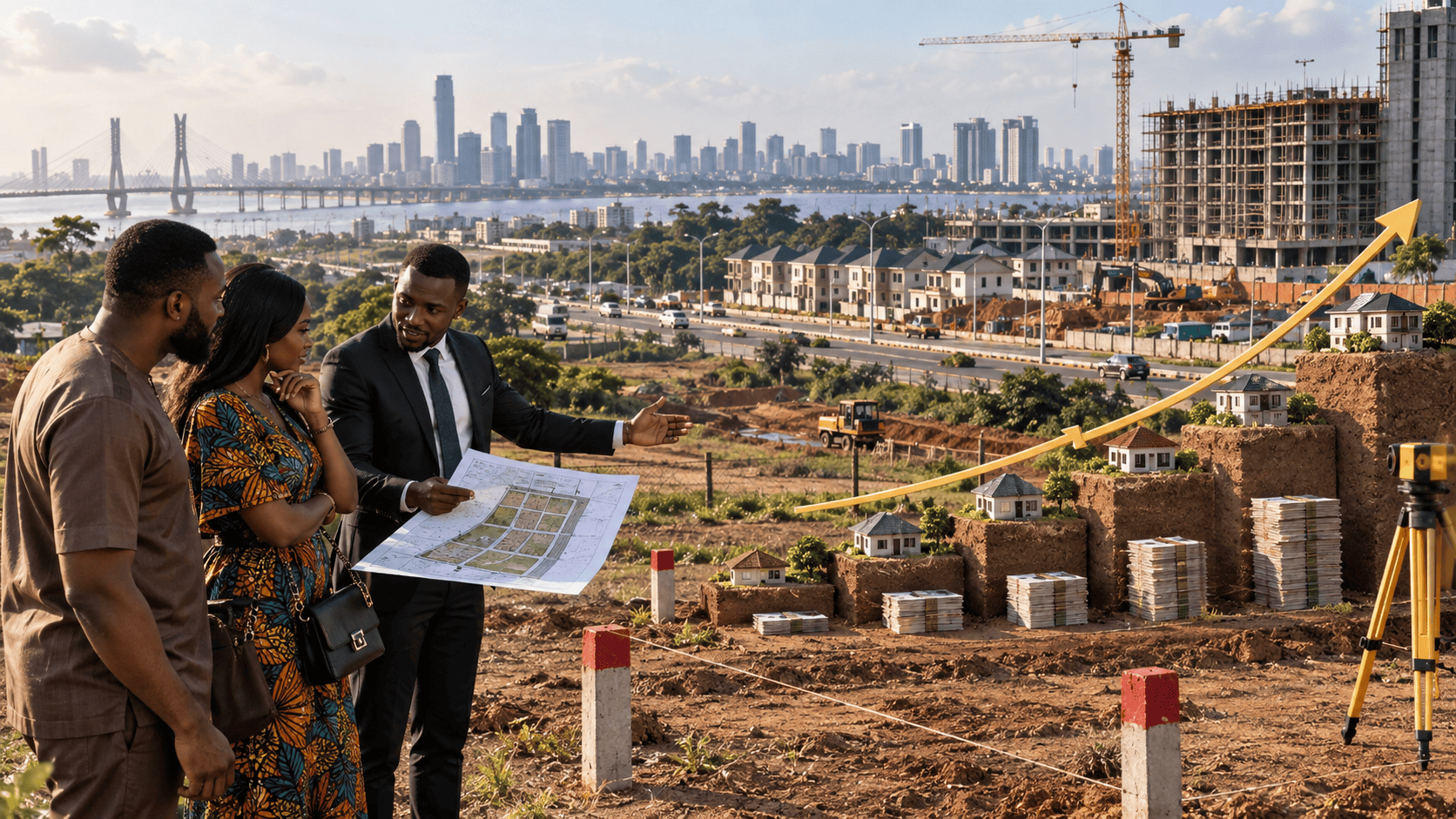
Why Land Prices Keep Rising in Nigeria Every Year
If you've watched a plot you were considering last year cost noticeably more today, you're not imagining it. Land prices across Nigeria have been on a consistent upward trajectory for years, not just in Lagos, but across most major growth corridors nationwide. Here's what's actually driving it.
Naira Depreciation Pushes Money Toward Hard Assets
The naira has lost significant value against major currencies over the past several years. When a currency weakens, prices for goods and services denominated in that currency, including land, tend to rise in nominal terms, even when the underlying value of the asset hasn't fundamentally changed. Sellers reprice to reflect replacement cost and inflation, and buyers, aware that cash is losing value, increasingly move savings into land rather than holding naira.
Inflation Erodes Cash Faster Than It Erodes Land
Nigeria's inflation has run persistently high in recent years, and even with some easing (headline inflation eased to around 15.7% as of April 2026 from earlier highs well above 25%), it still consistently outpaces what standard savings accounts pay (typically 1.5%-4% annually). This creates a structural incentive: naira sitting in a bank account is a guaranteed loser against inflation, while land has historically kept pace or moved ahead. That incentive alone drives sustained demand, and demand drives prices.
Population Growth and Urbanization
Nigeria's population continues to grow, and a growing share of it is concentrating in and around major cities, Lagos, Abuja, Port Harcourt, and secondary cities like Ibadan and Enugu. More people competing for a fixed or slowly expanding supply of titled, usable land is a straightforward demand-and-supply driver of rising prices, independent of currency or inflation dynamics entirely.
Infrastructure Projects Create Localized Price Spikes
Specific infrastructure, a new airport, a university, a refinery, a major road, tends to trigger sharp, localized appreciation in the surrounding land market. We've seen this pattern directly in the corridors we cover: Gwagwalada's growth around the University of Abuja and its federal teaching hospital, Omagwa's value tied to the Port Harcourt International Airport corridor, and Oba's position near an international market and airport project under construction. Once a major project is confirmed or completed, land in its immediate vicinity typically re-prices upward, sometimes quickly.
Land Banking Behavior Compounds the Effect
As more buyers treat land purchase specifically as an investment or inflation hedge, rather than purely a plot to build on, demand increases independent of actual usage. This "land banking" behavior, buying now specifically because prices are expected to rise, can itself become part of what drives prices up, a self-reinforcing pattern common in markets where an asset is widely trusted to hold value.
What This Means If You're Still Deciding
Every one of these drivers points in the same direction: waiting typically doesn't make land cheaper, it makes it more expensive, both because of general inflation and because of the specific momentum in growth corridors. This is the core argument against pure cash-saving as a strategy.
It doesn't mean every plot, everywhere, is guaranteed to appreciate; location and title quality still matter enormously. But the broad, multi-year trend across Nigeria's real estate market has consistently favoured buyers who acted earlier over those who waited.
The Bottom Line
Land prices in Nigeria rise for structural, not speculative, reasons: currency depreciation, inflation, urbanisation, and real infrastructure investment. None of these forces are temporary or likely to reverse in the near term. That's the actual argument for buying sooner rather than later, not marketing pressure, but the underlying economics that have driven this trend consistently for years.
See what's currently available before prices move again: browse verified properties, or book a free consultation to discuss your options.
Frequently Asked Questions
Will land prices in Nigeria keep rising, or could they fall? Prices in specific overpriced or poorly documented pockets can and do correct. But the broad, structural drivers, currency depreciation, inflation, and urbanization, have pushed prices upward consistently for years and show no clear signs of reversing nationally.
Does every location in Nigeria see the same rate of price increase? No. Locations near major infrastructure projects, airports, universities, new roads, tend to see sharper, more localized appreciation, while other areas move more gradually in line with general inflation.
Is it better to buy now or wait for prices to stabilize? Waiting for prices to "stabilize" has historically meant paying more later in most Nigerian real estate corridors, since the underlying drivers (inflation, currency depreciation, urbanization) haven't reversed. That said, individual circumstances and specific locations vary.
How much do land prices in Nigeria typically rise per year? This varies significantly by location and corridor, some established areas see steady, moderate appreciation, while emerging corridors near new infrastructure can see much sharper, faster increases. There's no single nationwide rate.
Does inflation affect land prices the same way it affects other goods? Not exactly. While general inflation contributes to rising land prices, land also benefits from being a finite, tangible asset that many buyers specifically choose as a hedge against currency depreciation, which can drive demand and prices independent of broader inflation trends